

Child abuse is an act or failure to act on the part of a parent or caretaker that results in death, serious physical or emotional harm, sexual abuse or exploitation; or an act or failure to act which introduces an avoidable danger or substantial damage to anyone under the age of 18. Stated in Child Abuse and Neglect in the UK Today from the London, UK: National Society for the Prevention of Cruelty to Children, a national UK study of nearly 3,000 young adults reported that 21% of the surveyed had experienced physical abuse, 11% had experienced sexual abuse before the age of 16, 6% had experienced neglect, and 6% had experienced emotional abuse as they grew up. In the USA alone, child protective services agencies investigated alleged cases of maltreatment against 1.5 million children in 2008. Approximately 246,730 of those referrals resulted in confirmed cases of physical, emotional, and/or sexual abuse, and the vast majority of confirmed cases involved a child's biological parents as perpetrators.

According to The enduring effects of abuse and related adverse experiences in childhood, In the past two decades, much evidence has accumulated unequivocally demonstrating that child abuse and neglect is associated with a marked increase in risk for major psychiatric disorders (major depression, bipolar disorder, post-traumatic stress disorder [PTSD], substance and alcohol abuse, and others) and medical disorders (cardiovascular disease, diabetes, obesity, irritable bowel syndrome, asthma, and others). Moreover, the course of psychiatric disorders in individuals exposed to childhood maltreatment is more severe.
Child abuse is a serious problem.
Other Types Of Abuse Are :
Child physical abuse is when a person physically hurts a child. The abuse is not an accident. Here are some examples of child physical abuse:

Child sexual abuse is a major public health problem. According to the American Academy of Children and Adolescent Psychiatry (AACAP) about 1 in every 4 girls and 1 in every 13 boys in the US experience sexual abuse at some time in their childhood. The vast majority of sexual abuse is committed by someone that the child or their family knows. Child sexual abuse often takes place within the family, by a parent, stepparent, sibling or other relative; or outside the home, for example, by a friend, neighbor, childcare person, teacher, or stranger. When sexual abuse has occurred, a child develops many distressing feelings, thoughts and behaviors. Children may be threatened by the abuser and be fearful to tell anyone else, especially if the abuser is someone they know well. No child is prepared to cope with repeated pain and fear of sexual abuse. Even a two or three-year-old, who cannot understand the sexual activity, will suffer physically and emotionally. The longer the sexual abuse, the more negatively it impacts a child’s emotional and physical growth and development. Child victims of long periods of sexual abuse often develop low self-esteem, a feeling of worthlessness and an abnormal view of sex. The child may also become withdrawn and mistrustful of adults, depressed, intentionally harm themselves, and/or become suicidal.

-From mental abuse, children may face functioning issues and cognitive skills. This puts these children at an automatic disadvantage in society, children who faced mental abuse may have trouble in school, or even with their social skills growing up.
-Children may also face substandard mental and emotional health. Facing these issues at any age can lead to disorders such as depression, anxiety, and many other damaging problems.
-Growing up with parents that set bad examples for children may lead to sexual development being impacted.
-Children facing mental abuse may also have severe attachment difficulty. Facing abuse at a young age and building that attachment issue can lead to issues later down the road with relationships, romantically or friendly.
-Studies show that people who have experienced any form of child abuse or neglect are more likely to have major depressive disorder.
-Experiencing child abuse can affect how you feel about yourself and how you relate to others.
-Child abuse can also cause problems when it comes to forming and maintaining relationships because you are not mentally prepared for them.

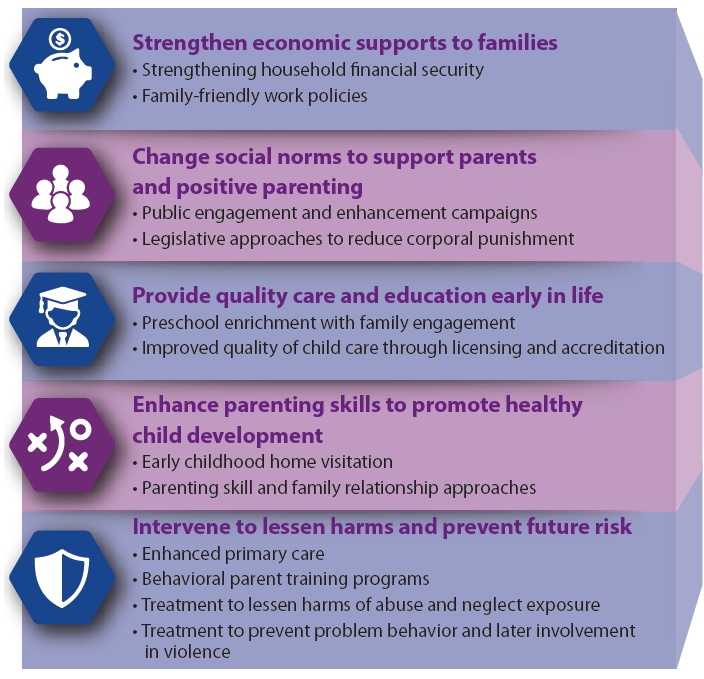
-The link between low income and abuse are hand and hand. In order to decrease child abuse, we have to increase financial freedom within these families.
-Informing other in order to change the social norm and promote positive parenting
-Having accredited child care, ensures quality care for children
- Developing better parenting skills, through training and teaching behavior management and other parenting skills
-Preventing future risk by implementing primary care and prevent problem behavior
If you suspect abuse or neglect, call 855-444-3911 any time day or night. This toll-free phone number allows you to report abuse or neglect of any child or adult. One number. One call. One person can make a difference.
It is shown that through donations, child abuse can be prevented by helping these children go through a stable and safe relationship to successfully continue through life, https://preventchildabuse.org/donate/ is the link to use in order to donate.
“Long-Term Consequences of Child Abuse and Neglect.” Long-Term Consequences of Child Abuse and Neglect - Child Welfare Information Gateway, Child Welfare Information Gateway, https://www.childwelfare.gov/pubs/factsheets/long-term-consequences/.
Miller, Susan B. When Parents Have Problems: A Book for Teens and Older Children Who Have a Disturbed or Difficult Parent. Charles C. Thomas, 2012.
Anda et al., 2006 R.F. Anda, V.J. Felitti, J.D. Bremner, J.D. Walker, C. Whitfield, B.D. Perry, S.R. Dube, W.H. Giles "The enduring effects of abuse and related adverse experiences in childhood." A convergence of evidence from neurobiology and epidemiology Eur. Arch. Psychiatry Clin. Neurosci., 256 (2006)
Ng, Warren. “Sexual Abuse .” AACAP Home, 2002, https://www.aacap.org/.
“Abuse, Trauma, and Mental Health.” Abuse, Trauma, and Mental Health | Office on Women's Health, https://www.womenshealth.gov/mental-health/abuse-trauma-and-mental-health.
Centers for Disease Control and Prevention. https://www.cdc.gov/violenceprevention/pdf/can-prevention-technical-package.pdf.