

The name Jane Roe is a pseudonym for Norma McCorvey. Norma had a difficult life, especially after she came out as gay to her parents and Church. Her mother beat her and then eventually sent her to a school for “delinquent children '' after she and a friend snuck across the border to stay in a hotel. (Kurtzleben, 2022) After going through school, Norma decides she wants to have a normal life. She gets married at sixteen and gets pregnant right away. Later in life, Norma admits that her husband beat her. When she has her first child she begs her mother to take it, but her mother refuses and later kidnaps the child. Then, things start to go downhill for Norma. She becomes a prostitute and starts selling drugs. She becomes pregnant again and places the child up for adoption. Norma gets pregnant for a third time and wants an abortion. This baby is known as the Roe baby. (Kurtzleben, 2022) To get an abortion she has to get lawyers and go to court, but she doesn’t want to be a plaintiff. Her lawyers, Linda Coffee and Sarah Weddington, cared more for her as a plaintiff than as a client. They could have helped her have an abortion because Sarah had one and worked for an abortion referral network. Instead, Norma had the baby and the case went forward. Roe versus Wade made abortion legal on January 22, 1973.
In 1995, Norma was working at an abortion clinic in Texas and there was an anti-abortion protest next to the clinic she worked in. At that protest was Evangelical minister, Flip Benham. Flip introduced himself to Norma and befriended her. She switches sides and becomes pro-life after meeting him and, also, because the pro-choice movement has been leaving her out of things. But Norma says that she doesn’t feel at home on either side because one: they are exploiting her and two: they both tell that she can’t be gay. Even though Norma had been pro life and pro choice she had two interviews, one the day after Roe V. Wade and another in 1995. When they asked her what she thought about abortion she replied “You know what? I now feel very strongly that abortion ought to be legal, but only through the first trimester of pregnancy. Because after that, you might be killing a baby.”
Roe versus Wade recognized that the decision whether to continue or end a pregnancy belongs to the individual, not the government. (Center of Reproductive Rights, 2023) This became law on January 22, 1973. Before this date, almost all states banned abortion, except in certain limited circumstances. Since abortion was illegal in most states, many people died because they didn’t have access to a safe way to have an abortion. Under Roe, abortions became safer and more accessible, but not for everyone. Low-income people, people of color, and young people were just a few that continued to face obstacles to abortion care. After the ruling, many abortion opponents pressed state and federal lawmakers to make a wide range of restrictive abortion laws to reverse Roe’s reproductive freedom. After 1992, the Supreme Court evaluated abortion regulations under an “undue burden” standard, which permits states to restrict abortion as long as burdens on access aren't too severe.

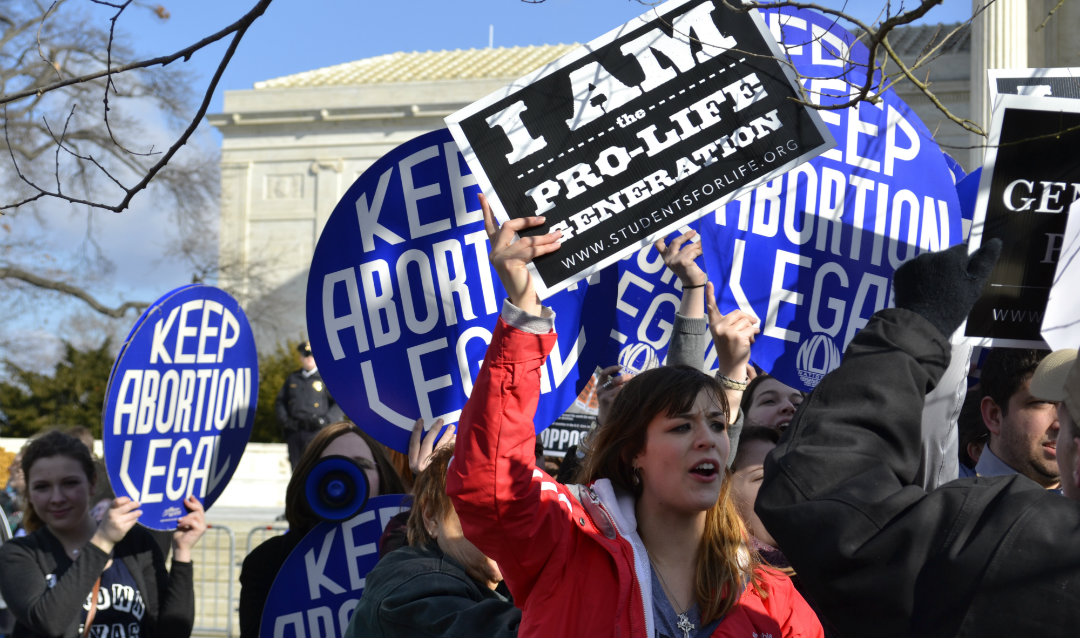
Abortion has been a very large political issue since the original ruling of Roe v. Wade in 1973. Abortion has always been a hot issue in court and even in political campaigns, candidates stating that they will end or restrict abortion or saying that they will strengthen abortion laws, which is often a large deciding factor for voters and supporters. In 2022, the over ruling of Roe v. Wade was either a devastating loss or huge win. But overturning the decades old ruling did not necessarily make abortion illegal, at least not in all states. In nearly half of the states in the U.S. the population primarily voted to ban abortion or put heavy restrictions on abortion while a smaller majority of states voted to protect and keep abortion.
Michigan is one of the few states to have almost fully protected abortion, but it was almost a close tie. Thankfully, reproductive rights in Michigan have been protected, but for the many other states that have a ban on abortion, it can be extremely saddening to find out the news of the ban. In states such as Mississippi, there are many laws banning and restricting abortion some of which include: unnecessary and harsh standards for abortion clinics(TRAP laws), counseling including information discouraging abortion(consent laws), a 24-hour wait period before having an abortion, a patient must get an ultrasound before the abortion (consent laws), and you can receive an abortion if and only if your life is endangered, rape, or incest, which must be reported to law enforcement and proven true. Parents must also be involved in and give permission for a minor to receive an abortion. Also the SB-8, or heartbeat law, states that any fetus with a heartbeat(usually occurs around the 6 week mark) can not be aborted making it extremely difficult to get an abortion due to the availability of abortion clinics and the fact that 6 weeks is extremely early to even find out you are pregnant. You can however have a chance to get an abortion if you can get a judicial bypass, which can be necessary if you can not get permission from your guardian or if you need an abortion for a medical reason.
The picture to the right shows the severity of the abortion laws in each state. The darkest red means that the state has completely banned abortion and it can only take place if the patient's life is in danger. The light blue states allow abortion until viability and in later cases of life or health endangerment. They also allow non-physician clinicians (except MN, NV, and NC) to provide abortions.
There is proof that legal and accessible abortion improves the lives of women. This was summarized in an amicus brief, which was put together by more than 150 economists. The research shows that access to abortion improves women’s economic well being. (Urban Institute, 2022) A study, called the Turnaway Study, found out that women that receive an abortion were less likely that the women denied an abortion to experience financial hardship, live in poverty, or to report poor health.
The Urban Institute fielded the Survey of Family Planning and Women’s Lives and they conducted followed up interviews with the participants. When they followed up they learned that nearly all of the women expected that they would carry an unplanned pregnancy to term and raise the child and about one-third of those women, later, reported that they had an abortion when faced with an unplanned pregnancy. In both groups, women worried about how the unplanned pregnancy would impact their finances, income, education, career, and their physical and mental well-being.
Sadly, the world that we live in continues to try and take away everything that women have and continue to fight for. It is a basic right to have access to healthcare, with people getting in the way of women getting access to healthcare we are more prone to finding dangerous alternatives or solutions to the issue at hand. Just because they try and ban abortion does not mean that they are getting rid of abortions, they will be getting rid of safe and accessible abortions. If women lose the right to choose…what else is going to happen? If people have the power to take away our reproductive rights, where will they draw the line on what else they can take away? Will I have to fight for my rights again? Why are we letting history repeat itself? Why are we going backwards and not trying to better the world we live in? Why do I have to fight for the right to do what I want with my OWN body? Why are other people in control of what I do with MY body? Think about the women in your life…think about the things they go through…think about what is at stake for them. You continue to say that you love the women in your life…but are you doing anything to bring awareness to the dangers we face.
Click here to sign a petition to get the FDA to remove barriers on abortion pills.
The abortion pills allow women to end pregnancies at home safely until 11 weeks and it is a cheap and practical alternative. The FDA has set unnecessary requirements to access this medication. The requirement is that only certified healthcare providers who meet certain qualifications are allowed to prescribe it. To make abortions safer, sign this petition to get the FDA to remove the unnecessary restrictions and give women the freedom to access the abortion pill.
Abortion Finder. “State Guide to Abortion in Michigan | Abortion Providers, Laws, and Support by State.” Abortion Finder, https://www.abortionfinder.org/abortion-guides-by-state/abortion-in-michigan. Accessed 21 March 2023.
Center for Reproductive Rights. “After Roe Fell: Abortion Laws by State.” Center for Reproductive Rights, https://reproductiverights.org/maps/abortion-laws-by-state/. Accessed 21 March 2023.
Center for Reproductive Rights. “Roe v. Wade.” Center for Reproductive Rights, https://reproductiverights.org/roe-v-wade/. Accessed 21 March 2023.
HOLLAND, JENNIFER L. “Abolishing Abortion: The History of the Pro-Life Movement in America.” Organization of American Historians, https://www.oah.org/tah/issues/2016/november/abolishing-abortion-the-history-of-the-pro-life-movement-in-america/. Accessed 21 March 2023.
Jaffe, S. (2022). “Chaos” for patients and providers after US abortion ruling. The Lancet, 400(10346), 85–86. https://doi.org/10.1016/s0140-6736(22)01268-5
Feng, E. (2022, May 20). Much of the U.S. could criminalize abortion. But how will those laws be enforced? NPR. https://www.npr.org/2022/05/20/1099914068/abortion-roe-v-wade-supreme-court-laws-states


