

On this page I'll discuss how overusing technology can affect you.

What's the longest you've ever gone without being on your phone?
It’s been becoming a growing problem as technology advances for people to be so consumed with their screens, but they don’t know that it causes more harm than most realize. Consuming too much social media causes self-esteem issues, blue light exposure can damage eyesight and cause a lack of sleep, and you also start losing the ability to focus. Being so heavily on the internet also can affect the way you act in real-life relationships. These are just a few things among the many that the overuse of tech does.

Young adults-adults consume so much social media that it can negatively affect their body image. Many platforms such as Instagram, Tik Tok, and Snapchat are full of models, and fitness trainers. Over-exposure to such things can give people unrealistic body standards that are rarely achievable.
In an article by Pol Allingham, he explains the harm consuming unrealistic body standards can do to young adults.
"Dr. Goldfield also said that users of social media may be exposed to hundreds or even thousands of images and photos every day, including famous people or fashion/fitness models. This causes internalized beauty standards that are almost unachievable." stated by Pol Allingham
Also staying up late and using your screen excessively also causes a lack of sleep and memory loss.
Blue light can also harm your eyes. Fatoumata Yanoga, MD states in her article "Does blue light from electronic devices damage our eyes?" that there is fear that "it will cause cumulative damage over a long period of time, as it passes through the cornea and lens and reaches the retina."

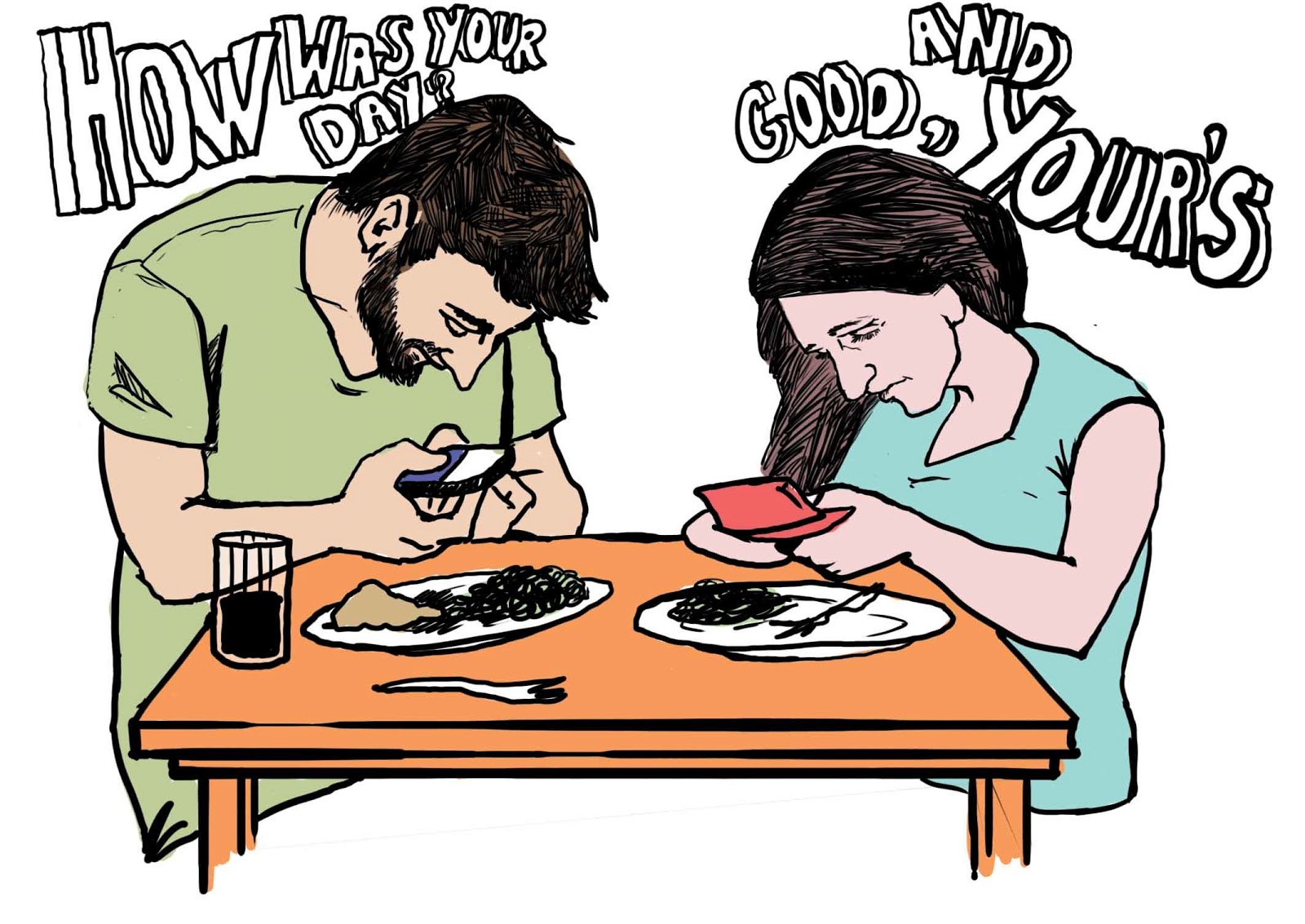
Being so consumed with tech also causes harm to relationships. Tech-mediated interactions that don’t address our close relationships do more harm than good. Teens are getting so used to communicating through media and text it's hard for them to be able to connect with people in real life.
Here's what behavioral scientist, Jenna Clark has stated in the article Knowing When Tech Does (and Doesn’t) Promote Positive Relationships “On the other hand, technology-mediated interactions that don’t really address our close relationships don’t seem to do us any good—and might, in fact, do us harm..” "That kind of passive usage is a good example of “social snacking.” Like eating junk food, social snacking can temporarily satisfy you, but it’s lacking in nutritional content. Looking at your friends’ posts without ever responding might make you feel more connected to them, but it doesn’t build intimacy."
People should try to lower their consumption of social media and also take time away from looking at screens. It could be beneficial for their brains and also would help so they don’t get eye complications in the future.
It would be beneficial to try to
https://behavioralscientist.org/knowing-when-tech-does-and-doesnt-promote-positive-relationships/
https://hms.harvard.edu/news/screen-time-brain.